Hublot: The Magic of Fusion in Fine Watchmaking
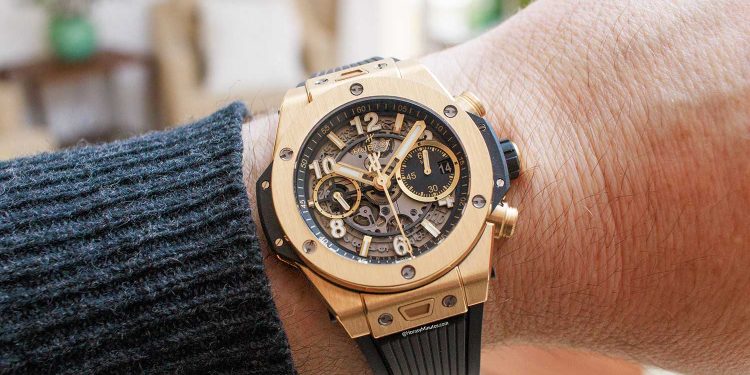
 In a world where certain unions seem impossible, there are brands that defy convention and forge the unexpected. Hublot is one of them — the iconic Swiss manufacture founded in 1980 that has reshapedfine watchmaking through a relentlessly avant-garde creative vision. This is the story of how Hublot dismantled boundaries and conjured a magical fusion between past and future, establishing an enduring legacy in the watchmaker’s art.
The story of Hublot begins with a deceptively simple idea: combining gold and natural rubber in a single watch. This unconventional pairing proved an overwhelming success, establishing Hublot as a pioneer in the use of materials that had never before coexisted in fine watchmaking. The concept — known as the Art of Fusion — marked the dawn of an era in which creativity became the protagonist, allowing Hublot to forge a lasting bond between horological tradition and genuinely futurist thinking.
Hublot’s ascent continued under the stewardship of Jean-Claude Biver, who drove the brand to new heights. Less than a year after assuming leadership, Hublot unveiled the Big Bang Gold Ceramic, a chronograph that swiftly became an industry icon. With its distinctive design and innovative fusion concept, the watch stood as a clear expression of Biver’s vision — solidifying Hublot’s position in the global market and charting the course for all that followed.
Over the years, Hublot has developed four emblematic collections — Big Bang, Classic Fusion, and Spirit of Big Bang — each continuing the narrative of material fusion. Drawing on proprietary elements such as exclusive King Gold, Hublonium, and other innovative compounds, the brand has redefined what is possible in watchmaking design. This relentless pursuit of innovation led Hublot to establish its own foundry, where the future of materials and metallurgy is explored in depth.
A defining milestone in Hublot’s history was the launch of the Big Bang Unico Sapphire All Black, crafted entirely from smoked sapphire crystal. The model not only demonstrated the brand’s absolute commitment to innovation — it also attracted the attention of LVMH, the world’s foremost luxury group, which acquired Hublot and brought a renewed focus on complexity and design to its watchmaking.
Yet the Art of Fusion extends well beyond the product itself — it is the animating philosophy of the entire company. Jean-Claude Biver was a pioneer in aligning the brand with the world of football, making Hublot official partner of the Swiss national team and official timekeeper of events including the UEFA Euro 2008™ and FIFA. These associations not only broadened Hublot’s reach but set new standards for how luxury brands engage with the sporting world.
Hublot’s relationship with motorsport and other disciplines has been equally distinguished. As the official watch of Formula 1™ and the partner of Ferrari, the brand has produced more than twenty-five models that embody the connection between fine watchmaking and high-speed competition. Its presence in polo and its collaborations with celebrated golfers such as Dustin Johnson further confirm a sporting footprint that is, by any measure, without parallel.

 '
'