Google Introduces Agent2Agent
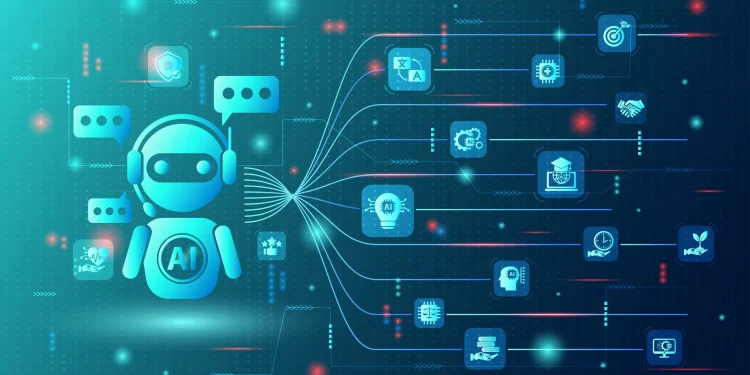
Google Introduces Agent2Agent
In a world where artificial intelligence (AI) is advancing at an extraordinary pace, Google has taken a decisive step forward with the introduction of Agent2Agent (A2A). This innovative open protocol enables direct interaction between AI agents, facilitating communication and collaboration across diverse platforms and enterprise applications — regardless of origin or underlying technology. A2A does not merely transform the way autonomous agents from Google and other companies interact; it opens the door to an ecosystem where productivity and efficiency reach an entirely new order of magnitude.
Intelligent agents are autonomous systems that perceive their environment, process data, and act to achieve specific objectives. Unlike Robotic Process Automation (RPA), which is confined to repetitive tasks, these agents are capable of adapting to complex and dynamic contexts. While Large Language Models (LLMs) remain primarily focused on natural language processing, AI agents incorporate autonomous reasoning and decision-making capabilities.
“To maximize the potential of AI agents, it is essential that they be able to collaborate in multi-agent environments,” notes Google‘s development team. This approach will allow organizations to automate complex workflows with far greater effectiveness.

How does Google’s A2A actually work? The protocol is structured around a client agent that formulates tasks and a remote agent that interprets and executes those requests. The system’s central instrument is the Agent Card — a JSON (JavaScript Object Notation) formatted document that describes each agent’s capabilities, enabling identification of the most effective collaboration. Interactions unfold through a defined task lifecycle, with the output of each operation referred to as an artifact. Throughout this process, agents exchange messages containing contextual data and user interface elements — videos, web forms, and more — all in real time.
Cross-sector collaboration driving the advance of artificial intelligence
Among the most compelling dimensions of A2A’s development is its foundation of collaboration with more than 50 technology partners, including recognized names such as Salesforce, ServiceNow, SAP, and leading consultancies including Deloitte and Accenture. This alignment of industry forces reflects a shared vision of a future in which AI agents — regardless of their individual capabilities — collaborate seamlessly to optimize enterprise workflows. With a recent report indicating that 85% of organizations are already deploying some level of artificial intelligence, demand for autonomous agents is clearly in full expansion.

The arrival of Agent2Agent marks a milestone with the potential to meaningfully improve operational efficiency and accelerate a shift toward more adaptive, intelligent enterprise structures. With the A2A protocol now available in early access — and a production-ready version expected before the end of 2025 — Google has positioned itself firmly at the vanguard of the new AI era, challenging organizations to fundamentally rethink the future of their operations.


 '
'