Parque Quetzalcóatl: Architecture That Surrenders to Its Landscape
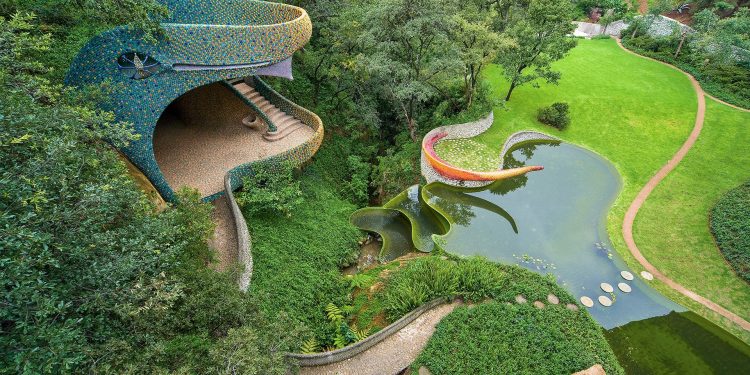
In Naucalpan de Juárez, State of Mexico, Parque Quetzalcóatl stands apart for its sculptural lines and an unwavering commitment to the conservation of its surroundings.
The project, conceived by Javier Senosiain, unfolds across an irregular terrain where cavities, rock formations, and spontaneous vegetation accumulated over the course of years. Rather than correcting that landscape, the architecture interprets it. There are no rigid lines, no dominant axes — only continuity.
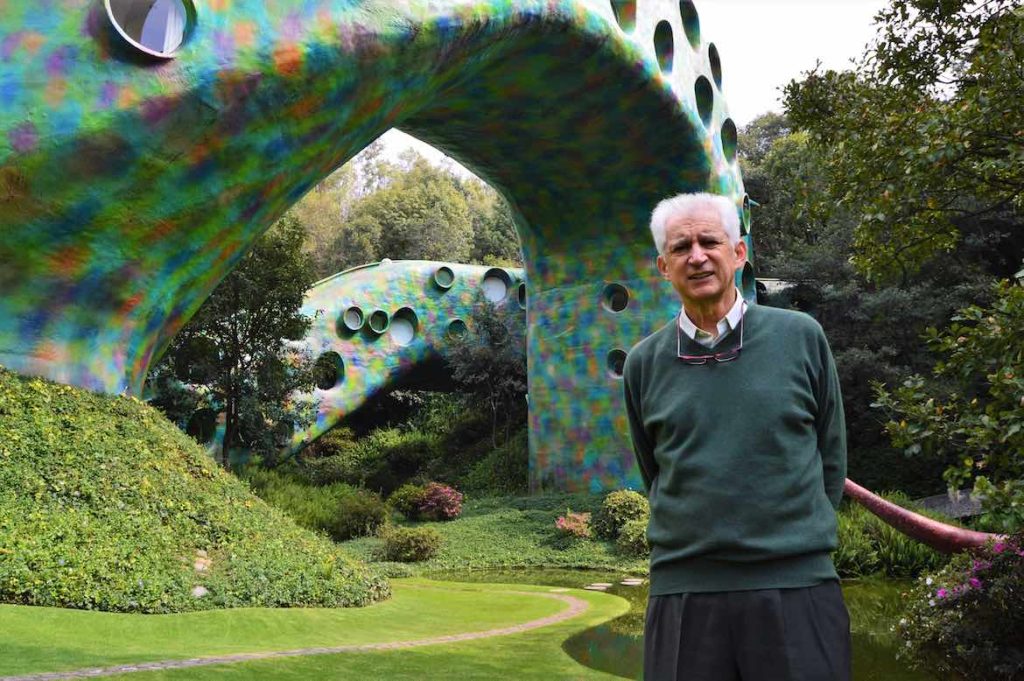
Javier Senosiain
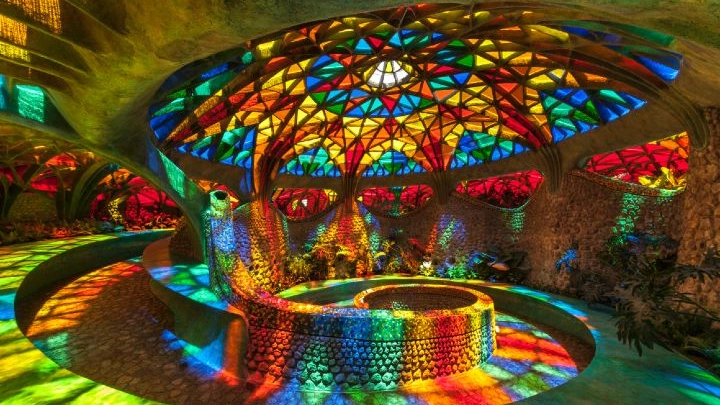
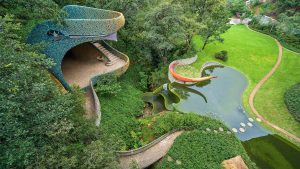
The centerpiece is the Nido de Quetzalcóatl, a structure that serpentines through the terrain as though it had always been there. Its scale cannot be grasped from a single vantage point — it reveals itself in fragments. The exterior skin dialogues with the surrounding landscape, while the interior transforms with light filtering through stained-glass panels in amber, green, and blue. Every step reshapes one’s perception of the space.
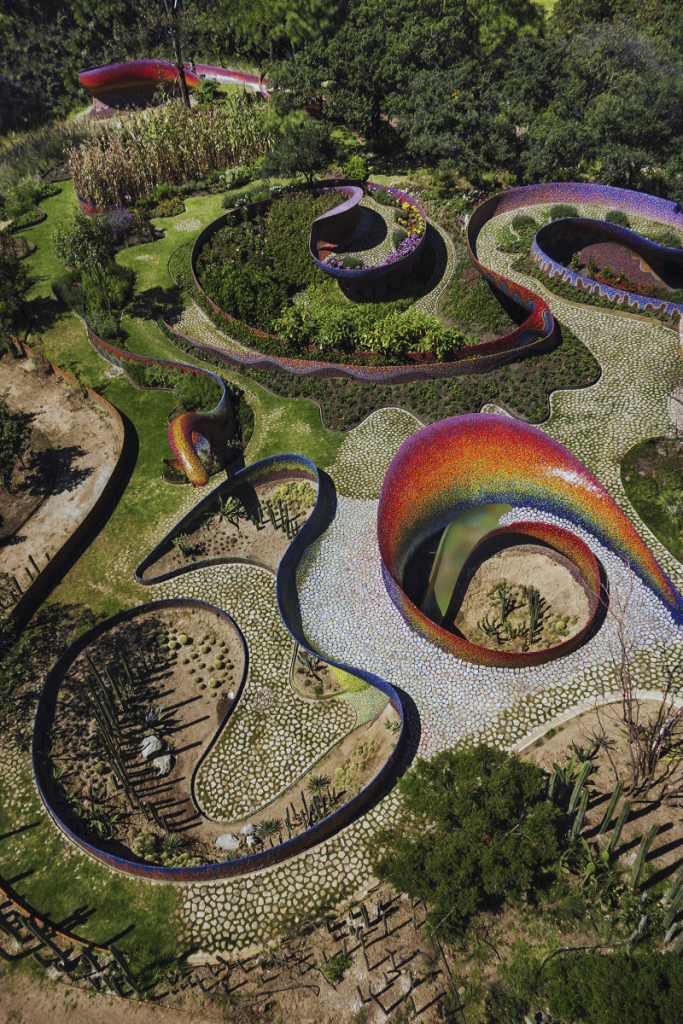
The ensemble does not follow a logic of exhibition. There is no single observation point, no obvious postcard view. The visitor advances, descends, pauses. The experience is progressive. The design does not seek to impress in an instant — it seeks to endure in memory.
Access is an essential part of that narrative. This is neither a public park nor a space of free transit. Visits are by reservation only, in small groups, and always guided. Certain areas remain off-limits; residential units operate under a private scheme, with no public exposure of their owners — reinforcing the project’s discreet character and maintaining strict control over the experience.
You may also enjoy: A Colossal Sculpture That Breathes Like a Hive
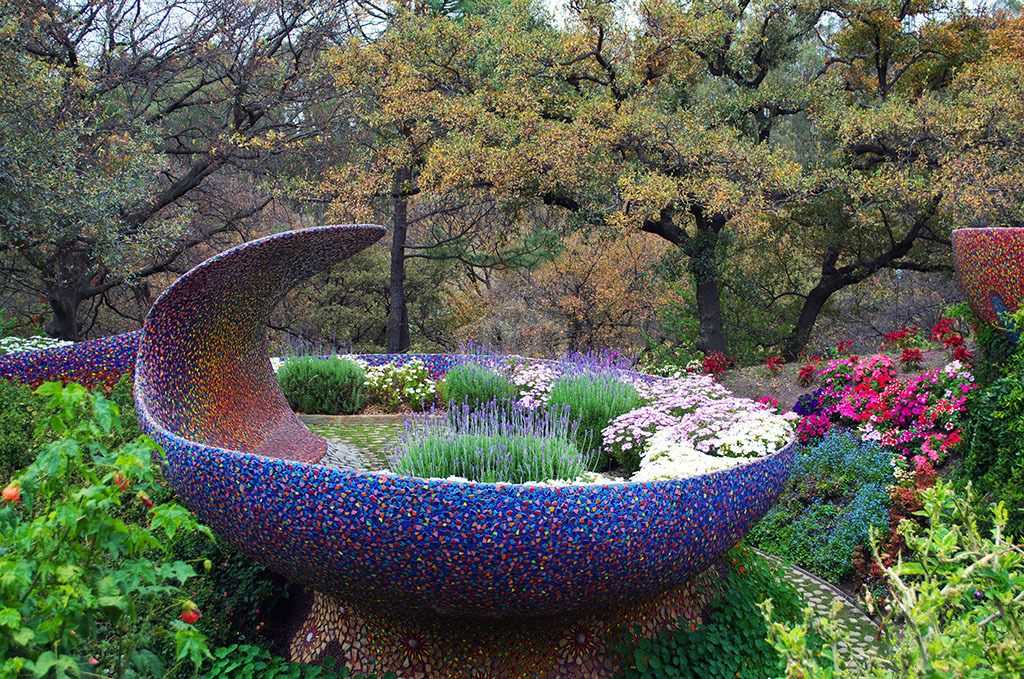
The project falls within the tradition of organic architecture, yet it avoids a merely decorative interpretation. It does not replicate natural forms — it works with them. The terrain does not adapt to the design. The design submits to the terrain.
The project’s origin answers a precise intention: to demonstrate that a development can integrate with its environment without erasing it. Driven by a private initiative closely linked to Javier Senosiain himself, Parque Quetzalcóatl is conceived less as a conventional park than as an inhabitable laboratory of organic architecture. Its purpose is not to attract volume but to preserve a controlled experience in which visitors come to understand the space through the act of traversing it. In a context where so many developments prioritize volume, speed, and standardization, Parque Quetzalcóatl introduces another variable entirely: time.
The paradox is not how to build more…
It is what is worth preserving while we build.


 '
'