When Reality Outpaces Cinema: The Conclave No One Saw Coming
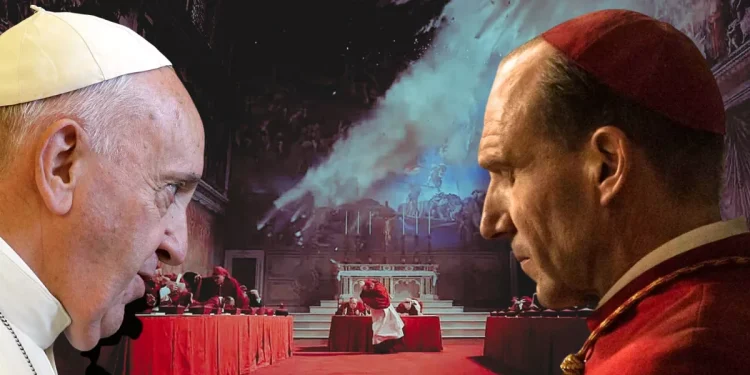
Viewership for Conclave Surges in the Wake of Pope Francis’s Death
The death of Pope Francis at 88 has ignited an unexpected fascination with the conclave and the inner workings of the Church — sending viewership for Conclave, Edward Berger‘s acclaimed thriller, soaring by 283%.

The announcement of Pope Francis‘s passing last Monday stunned the world and left a profound void for millions of Catholics. It has also produced a remarkable cultural phenomenon: what might be called the Francis effect — a surge in viewership for films exploring the life and institution of the Church. According to data from analytics firm Luminate, viewership for Conclave — which dramatizes the secretive process of electing a new pope in the Sistine Chapel — leapt from 1.8 million minutes viewed on April 20 to a staggering 6.9 million minutes on Monday alone. The surge extended beyond a single title: The Two Popes, which chronicles the relationship between Francis and his predecessor Benedict XVI, recorded an even more striking increase of 417%.
A Renewed Appetite for Stories of the Church
What accounts for this sudden rush to the screen? Beyond the intrinsic drama of the conclave itself — in which cardinals are sequestered in complete isolation to deliberate — the tragedy has led many to revisit the defining moments of recent Catholic Church history. News events have always shaped what audiences seek out, and Francis’s death touched not only an emotional nerve but a deeply intellectual one, driving viewers to find context, reflection, and meaning through cinema.
Pope Francis’s funeral is to be held before St. Peter’s Basilica in Rome this Saturday, with cardinals expected to gather from every corner of the globe. The conclave — a word derived from the Latin for “under lock and key,” an allusion to the strict seclusion of its participants — will follow shortly thereafter. Once again, the world will be watching: not only because of the event’s profound religious significance, but because the election of a new pope is a narrative that captivates and intrigues even those who stand apart from the faith.
As media and public attention converges on Conclave and The Two Popes, it is worth noting that other related productions — among them Call Me Francis — have not achieved the same impact. Perhaps the moment calls for a deeper reckoning: with what the Catholic Church represents today, and with the singular weight of the papacy that is about to be assumed.


 '
'