What the Next GT-R Will Look Like
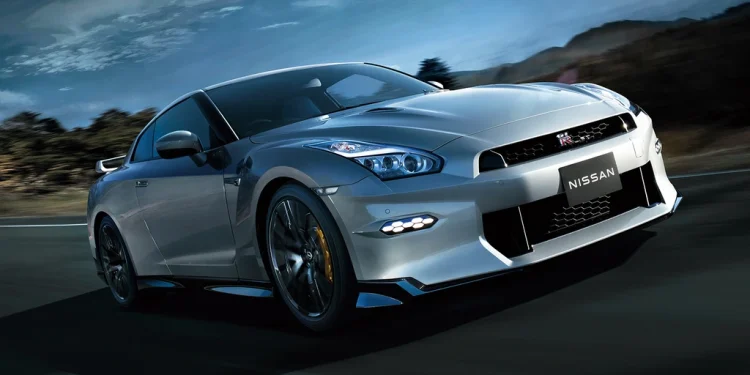
At the New York Auto Show, Ponz Pandikuthira, Nissan‘s North America planning director, made one thing clear: the next-generation GT-R — known internally as the R36 — will not be a fully electric model, as had been widely discussed for years. Instead, the Japanese marque is moving decisively toward a hybrid solution.
Whether the future GT-R will adopt a conventional hybrid or a plug-in hybrid (PHEV) format has yet to be decided, though Pandikuthira indicated a preference for the latter. He acknowledged, however, that traditional hybrid technology remains better suited to a car that must perform at the limit on track. Thermal management and energy density continue to be the principal engineering challenges for both alternatives.
Nissan had developed fully electric GT-R prototypes, but the results were unconvincing. “It’s like completing a lap at the Nürburgring and then having to recharge the car,” Pandikuthira explained. “And that charge would take time. It simply isn’t realistic.” Even with solid-state batteries on the horizon, the executive maintains that a fully electric GT-R cannot meet the performance standard expected of the legendary Japanese sports car. “You can build something to prove you have an electric GT-R,” he said, “but it wouldn’t be a real GT-R.”

Rather than an electric revolution, Nissan plans to evolve its twin-turbocharged 3.5-liter V6, which will carry over into the new generation. According to Pandikuthira, the block is engineered to meet emissions regulations through at least 2032 and will remain turbocharged.
Another pivotal dimension of the R36’s development may involve a collaboration with Honda. Despite a potential merger between the two companies failing to materialize, Nissan’s new CEO, Iván Espinosa, has maintained an active dialogue with his counterpart. Platform-sharing with the next Honda/Acura NSX has not been ruled out — a model of cooperation not unlike that of Aston Martin and Mercedes-AMG, where technologies are shared without compromising the distinct character of either car.
The wait for the R35’s successor — whose production run has now concluded — could extend another three to five years, by Pandikuthira’s own estimation. For now, devotees of “Godzilla” will need patience before the next chapter of this iconic lineage is written.


 '
'