The Universe as We Have Never Seen It
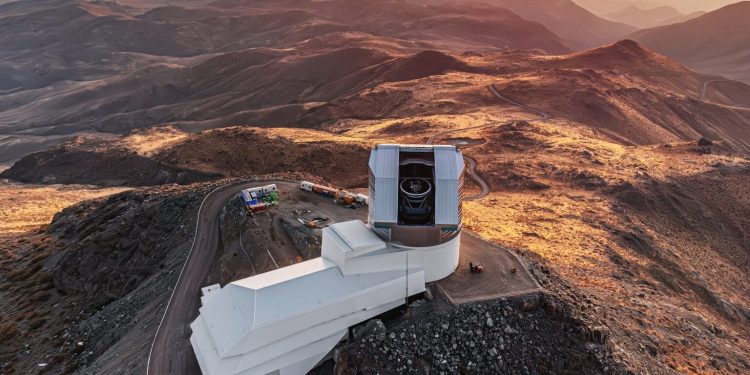
The Chilean observatory housing the world’s most powerful camera offers a new vision of deep space
A new window onto the cosmos has just opened. From the summit of Cerro Pachón in Chile, a 3,200-megapixel camera — the largest ever built — has begun revealing images of the universe at a level of detail without precedent. It marks the beginning of a new era in astronomy, defined by visual precision and the capacity to observe what was once invisible.
 All images courtesy of the Vera C. Rubin Observatory, NSF–DOE.
The milestone is unfolding at the Vera C. Rubin Observatory, a monumental structure named in honor of the pioneering astronomer who transformed our understanding of dark matter, Dr. Vera C. Rubin. The telescope does not merely pay tribute to her legacy — it promises to redraw the boundaries of our knowledge of deep space. Among its capabilities: detecting ninety percent of near-Earth asteroids, tracking ephemeral events such as supernovae, and capturing celestial bodies that have, until now, remained entirely beyond our sight.
The first images have already been released, and they are, without qualification, spectacular. Over the next ten years, the Legacy Survey of Space and Time (LSST) will record millions of photographs, returning again and again to the same points in the sky to reveal their changes and secrets.
 All images courtesy of the Vera C. Rubin Observatory, NSF–DOE.
Yet beyond the data, this mission is, above all, a visual triumph — an unprecedented portrait of the universe that invites us to rediscover our place within it. What was once darkness now has light. And what appeared motionless transforms before our eyes.
 ‘Cosmic Treasure Chest.’ All images courtesy of the Vera C. Rubin Observatory, NSF–DOE.
 Trifid Nebula. All images courtesy of the Vera C. Rubin Observatory, NSF–DOE.

 '
'