The Nobel Laureate Looking Ahead
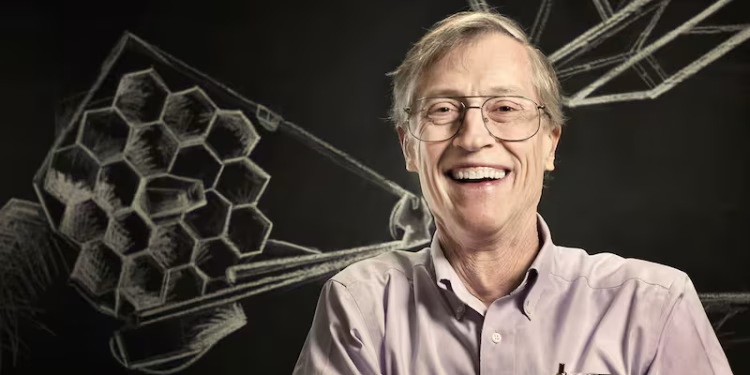
American astrophysicist John C. Mather, Nobel laureate in Physics, has long been one of science’s most authoritative voices on the exploration of the cosmos. During a recent visit to the University of Almería, he turned his attention to artificial intelligence. Mather — celebrated for his work on the James Webb Space Telescope and the COBE project — underscored AI’s current role as a tool for decoding astronomical phenomena.
Yet he was equally measured in his caution. The moment when AI can fully unleash its potential in physics, he suggested, has not yet arrived. “In the very long run, it will be different,” he said — a quiet acknowledgment that the technology may yet revolutionize scientific discovery, even if its present impact remains circumscribed.
During his visit to the Calar Alto Observatory, Mather reflected on the growing erosion of public trust in science and the urgent need for sustained institutional support for research. “Congress could say: no, we want science,” he concluded — a pointed reminder that enthusiasm for knowledge, and the will to fund it, remain indispensable companions on the journey into the unknown.


 '
'