The Guggenheim: Spiral of Time
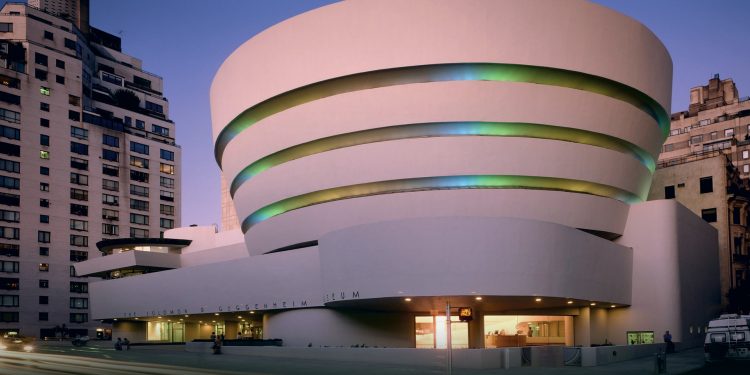
A few steps from Central Park, where Manhattan’s concrete yields to forms that seem born of a dream, stands the Guggenheim Museum. It is not merely a building — it is a declaration of intent, a habitable sculpture, a decisive rupture with the city’s vertical order.
Its rounded silhouette — like a nautilus shell or an oversized teacup — has defied the straight lines of its surroundings since 1959. Conceived over fifteen years of sketches and more than 700 drawings, the Guggenheim Museum stands as Frank Lloyd Wright’s supreme achievement.
You may also enjoy: Frank Lloyd Wright: Art in the Works He Never Built
“I wanted peace, openness, a connection with nature.”
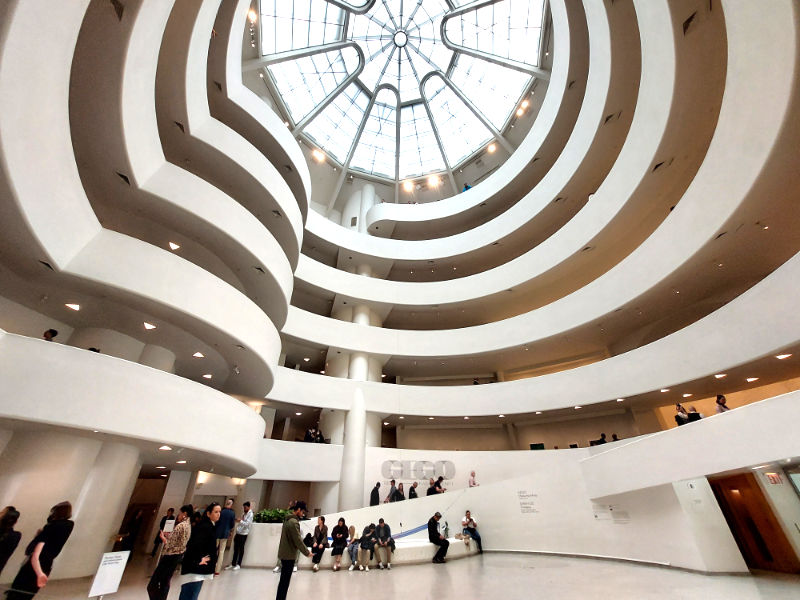
To that end, he doubled the width of the sidewalk, inviting passersby to rest on its low curved wall.
Today, designated a National Historic Landmark and a UNESCO World Heritage Site, the building draws as many visitors for its architecture as for its collection.
Inside, everything is in motion. In place of conventional floors, a continuous spiral ramp guides visitors on a descending journey through the galleries.
The permanent collection is a treasury. The museum holds the world’s largest concentration of works by Kandinsky. It also houses Picasso — one of the most significant collections of his work outside Spain — alongside Mondrian, Chagall, and Brâncuși.
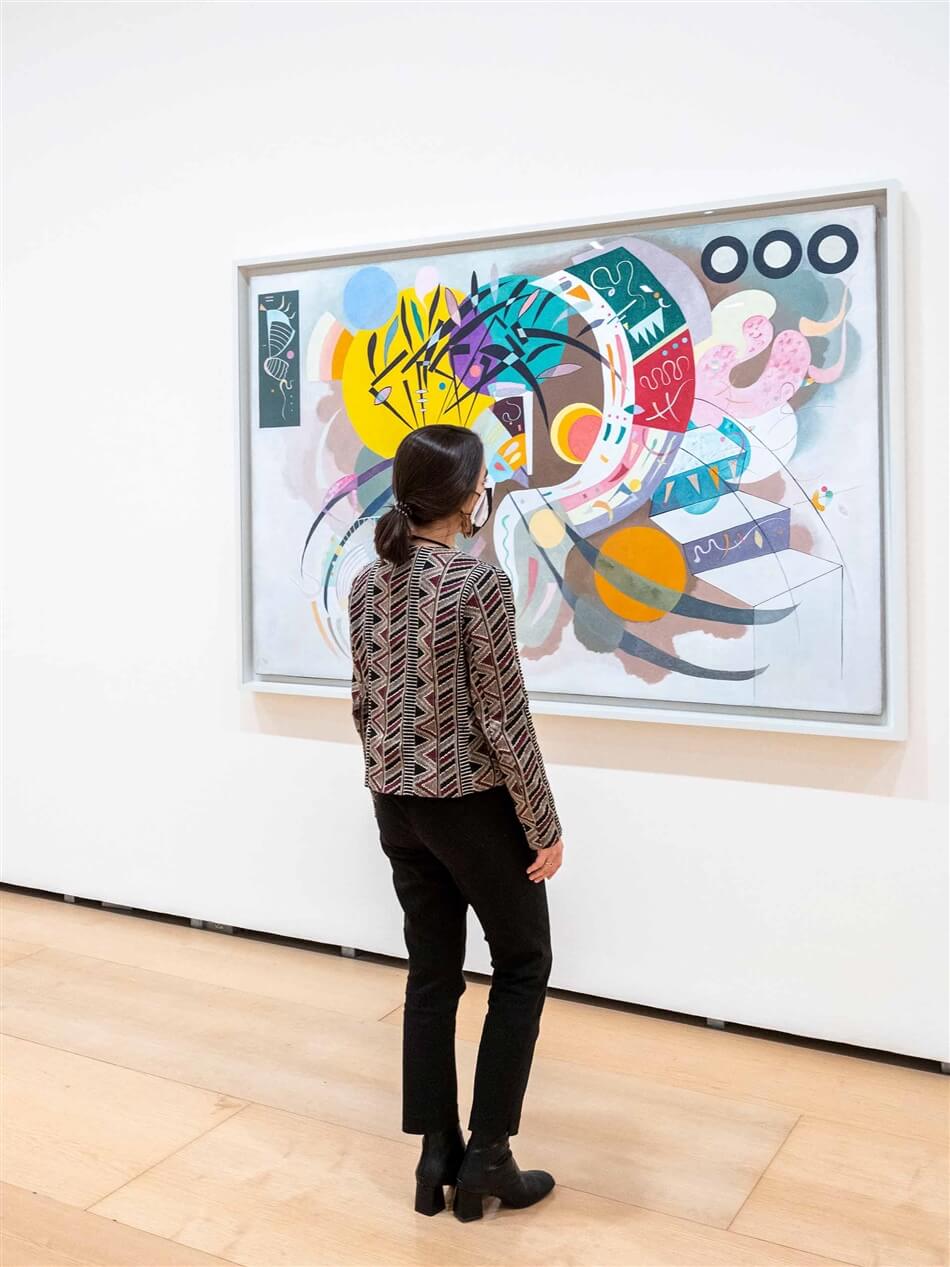
Kandinsky
The Guggenheim Museum remains a cultural landmark — not only for what it exhibits, but for the singular way in which it does so. Read more in the latest edition of Elite Business.

 '
'