The Future Is Open Source

In an increasingly interconnected and technology-driven world, the convergence of artificial intelligence and robotics is emerging as one of the most compelling transformations of our time. The recent acquisition of Pollen Robotics by Hugging Face marks a pivotal moment in that process — one defined by a deliberate commitment to democratizing robotics through open-source development. What follows is an exploration of the principles and possibilities that may define the open-source AI robots of tomorrow.
1. Transparency and Trust
At the heart of open-source robotics is a foundational principle: transparency. Clément Delangue, CEO of Hugging Face, has been emphatic about the centrality of trust in robotic systems — particularly those designed to interact with people in the course of daily life. A robot that can be inspected, modified, and improved by an open community will command a far greater degree of confidence than any closed, proprietary system.
2. Accessibility and Collaboration
Openness in both design and software invites a diverse community of developers and enthusiasts into the creative process, accelerating the pace of innovation in ways that no single company can match alone. Users can adapt hardware and software to meet their specific needs — and as Matthieu Lapeyre, co-founder of Pollen Robotics, has noted, developers can 3D-print a faulty component or fabricate entirely new parts to advance their robots’ capabilities.
3. Expanding Use Cases
The inherent flexibility of open-source robotics has the potential to unlock a remarkably broad range of practical applications. Hugging Face envisions future descendants of the Reachy 2 robot deployed across homes, offices, and diverse industries. As these systems grow more refined, the scope of achievable tasks expands considerably — from household cleaning services to meaningful assistance in healthcare settings.
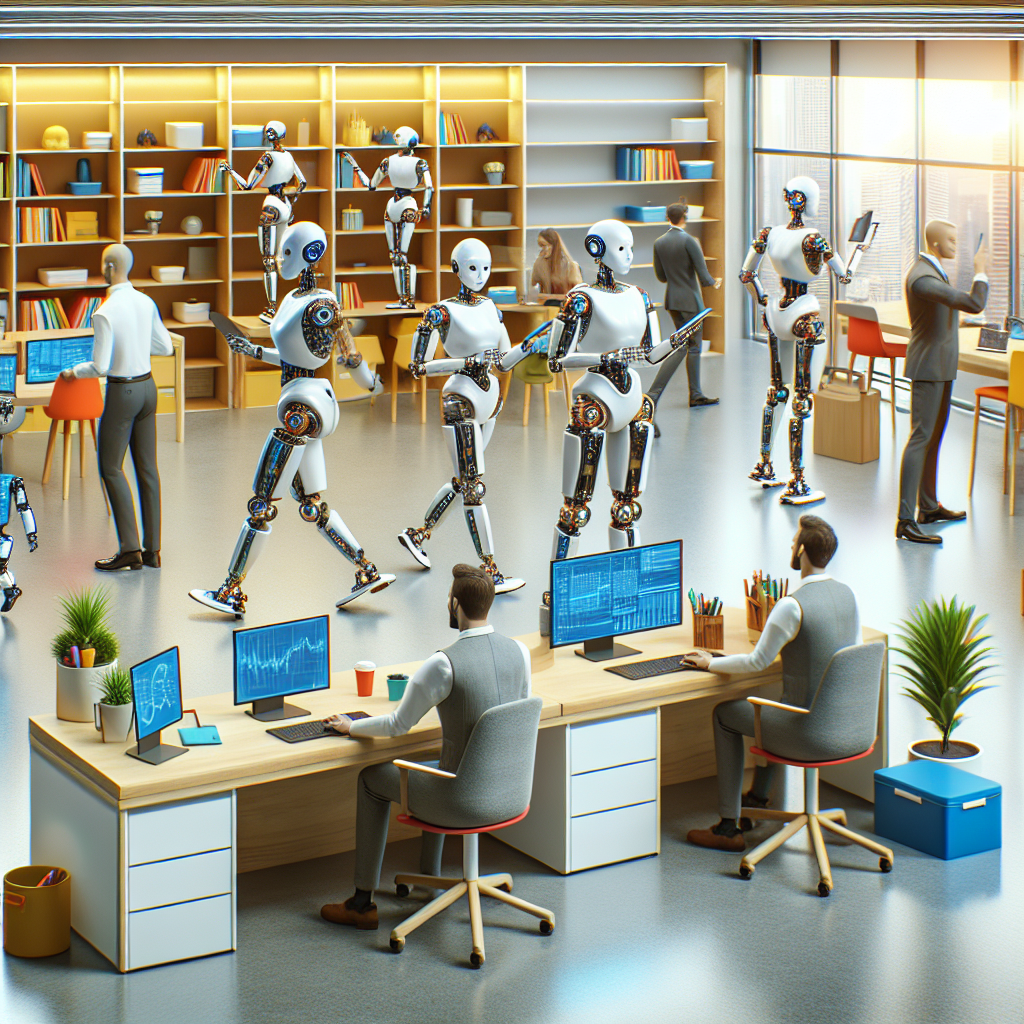
4. Community-Driven Innovation
The rise of open-source AI has already empowered researchers and emerging companies to develop sophisticated models that once required the resources of only the largest technology enterprises. This ethos has extended to hardware: accessible, user-fabricated designs are becoming increasingly viable. In this context, Sergey Levine, a researcher at the University of California, Berkeley, has argued that a more open development model could decisively accelerate the pace of innovation across the entire field of robotics.
5. Challenges and Ethical Considerations
The promise of open-source robotics does not arrive without complications. The development of humanoid robots has long been subject to overstatement and misunderstanding, with ambitious projections that frequently outpace delivery. Equally pressing are the ethical questions surrounding how these systems will ultimately be used — and whether emerging regulatory frameworks will prove adequate to govern a field evolving at this pace.
Open-source AI robots represent a singular opportunity to fundamentally redefine the relationship between humans and machines. With transparency, collaboration, and community-driven innovation as their guiding principles, they hold the potential to expand the capabilities of robotic systems well beyond anything a closed model could achieve — delivering genuinely creative solutions to the challenges ahead. The imperative, however, is to address the ethical complexities of this frontier with the same rigor and ambition brought to its technical development.



 '
'