The Biohybrid Revolution: An Artificial Hand That Mirrors Nature
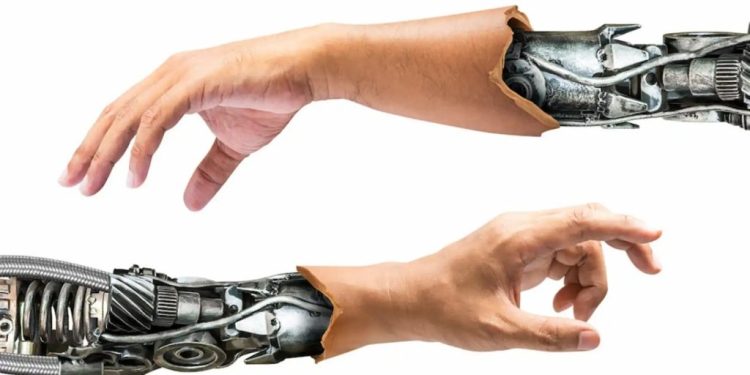
 In the rapidly advancing world of robotic technology, the development of biohybrid robots is opening new frontiers at the intersection of the biological and the artificial. This pioneering field of research combines biological tissues with artificial materials — incorporating living elements such as muscle, skin, and nerve tissue — conferring unique properties including flexibility and the capacity for self-repair. These attributes represent decisive advantages over conventional mechanical robots, which possess neither.
Until now, biohybrid robots were largely confined to simple structures of approximately one centimeter in length, capable of moving a single joint or hinge. That limitation has been dramatically overcome by a joint research team from the University of Tokyo and Waseda University, which has developed a remarkable 18-centimeter biohybrid hand. The achievement makes it the largest biohybrid robot ever built — and the first capable of moving its articulated fingers independently.
The hand’s construction involves an innovative process in which tendons are fabricated by rolling and bundling thin muscle tissue cultured in liquid, in a method not unlike assembling a sushi roll. Masaharu Takeuchi, professor at the Graduate School of Information Science and Technology at the University of Tokyo, notes that this technique has made it possible to overcome longstanding challenges related to muscular contraction force and contraction distance — enabling complex movements such as gestures and object manipulation that were previously unthinkable for conventional biohybrid robots.
The Creation of MuMuTA: A Breakthrough in Biohybrid Robotics
The actuation device at the heart of this biohybrid hand is known as the Multiple Muscle Tissue Actuator (MuMuTA). This inventive system bundles multiple thin muscle tissues to create a complex multi-joint structure. MuMuTA delivers a contraction force of approximately 8 mN (millinewtons) and a contraction ratio of 13 percent — surpassing conventional muscle actuators and enabling considerably more sophisticated and precise tasks.
It bears noting that, much like a human hand, the device is susceptible to fatigue — a finding that underscores the delicate balance between performance and tissue care. Developing a muscle actuator capable of driving large, complex structures requires increasing both force and contraction distance. Yet increasing muscle thickness risks cellular necrosis, a drawback the team has successfully mitigated by grouping multiple thinner muscle tissues together.
This approach preserves the necessary nutrient supply while improving the orientation of muscle fibers by reducing tissue thickness. The result not only expands the possibilities of biohybrid robots but lays the groundwork for future research in the field of biomimetic robotics.
The 18-centimeter biohybrid hand marks a genuine milestone in the development of biohybrid robotics. Through advanced technology such as MuMuTA, the team at the University of Tokyo and Waseda University has not only demonstrated the extraordinary potential of merging biology with mechanics — it has opened a path toward robots that are more dynamic, more capable, and more true to life. The future of biohybrid robotics appears exceptionally promising, and this innovation may well mark the opening of a new chapter in which robotics and biology converge to produce machines that replicate human capability with unprecedented fidelity.


 '
'