Ronald Wayne, Apple’s Forgotten Co-Founder, and His Unexpected New Role
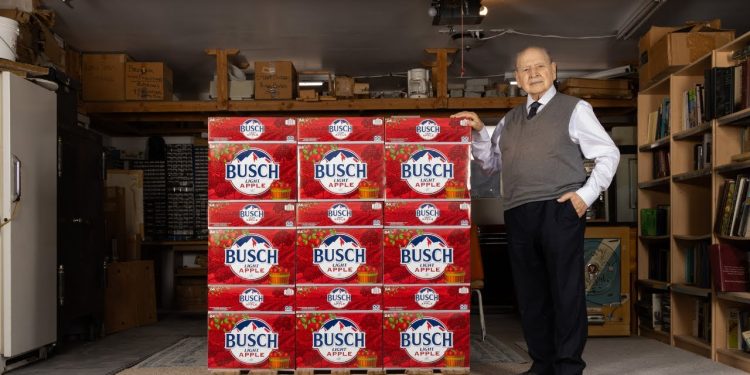

Ronald Wayne — a name that rarely commands the same recognition as Steve Jobs or Steve Wozniak — has found himself at the center of a surprisingly clever advertising campaign. Wayne, co-founder of Apple Computer, made a decision that would define him forever: in 1976, he sold his 10% stake in the company for $800. Today, that stake would be worth an estimated $270 billion.
That story, far from a footnote, has become the cornerstone of the comeback campaign for Busch Light Apple — an apple-flavored beer the brand discontinued in 2022. Overwhelming consumer demand, with fans reportedly hoarding cans and offering bounties to track them down, ultimately convinced Busch Light to revive the beloved brew.
The choice of Wayne as spokesman is nothing short of inspired. His personal story — defined by the loss of a once-in-a-generation opportunity — mirrors the anxiety consumers feel at the prospect of missing Busch Light Apple’s return. The campaign leans deliberately into that sentiment, deploying Wayne’s biography as a symbol of regret and the second chance that almost wasn’t. “You learn from life,” Wayne declares in the spot. “And today I’m here to tell you about a different kind of apple — one you won’t want to miss.”

Busch Light’s strategy reaches well beyond a standard product announcement. The brand connects with its audience through an emotionally resonant narrative — one that harnesses both the brand’s own equity and the peculiar legend of Ronald Wayne to craft a campaign that is as memorable as it is shrewd. The spot further reinforces Busch Light’s identity as a quintessentially Midwestern American brand by placing Wayne in a rural setting, deepening the emotional bond with its core audience. The fact that Wayne is originally from Ohio only sharpens that positioning.
The success of Busch Light — currently the most valuable beer brand and the sixth largest in the United States — is a testament to the effectiveness of this kind of storytelling. Ronald Wayne’s story transcends mere advertising copy, becoming a metaphor that speaks directly to the experiences and aspirations of a knowing, discerning audience.
In a market saturated with commercial noise, authenticity and narrative remain the most powerful tools available. The Busch Light Apple campaign, with Wayne as its anchor, does more than draw attention to a product — it opens a genuine dialogue with consumers, reminding them of the value of seizing the opportunities that define a life. In doing so, Ronald Wayne — a man forever marked by a single decision — becomes an unlikely symbol of something universal: the importance of never letting a rare thing pass you by.


 '
'