Reading Between the Lines: Steel, Light, and the Belgian Horizon Reimagined
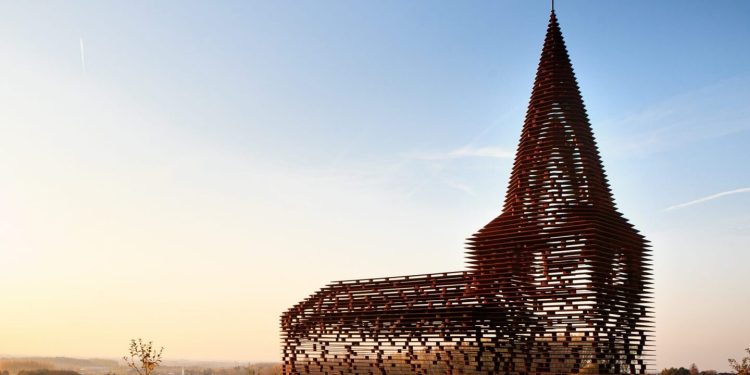
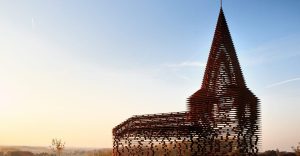
In the Limburg region of Belgium stands Reading Between the Lines — a work that reinterprets the figure of a rural church through an entirely contemporary formal language. Created by Belgian artists Pieterjan Gijs and Arnout Van Vaerenbergh, the piece uses the classic silhouette of a European chapel as the foundation for an open structure composed of horizontal steel plates that absorb the surrounding landscape from every direction.
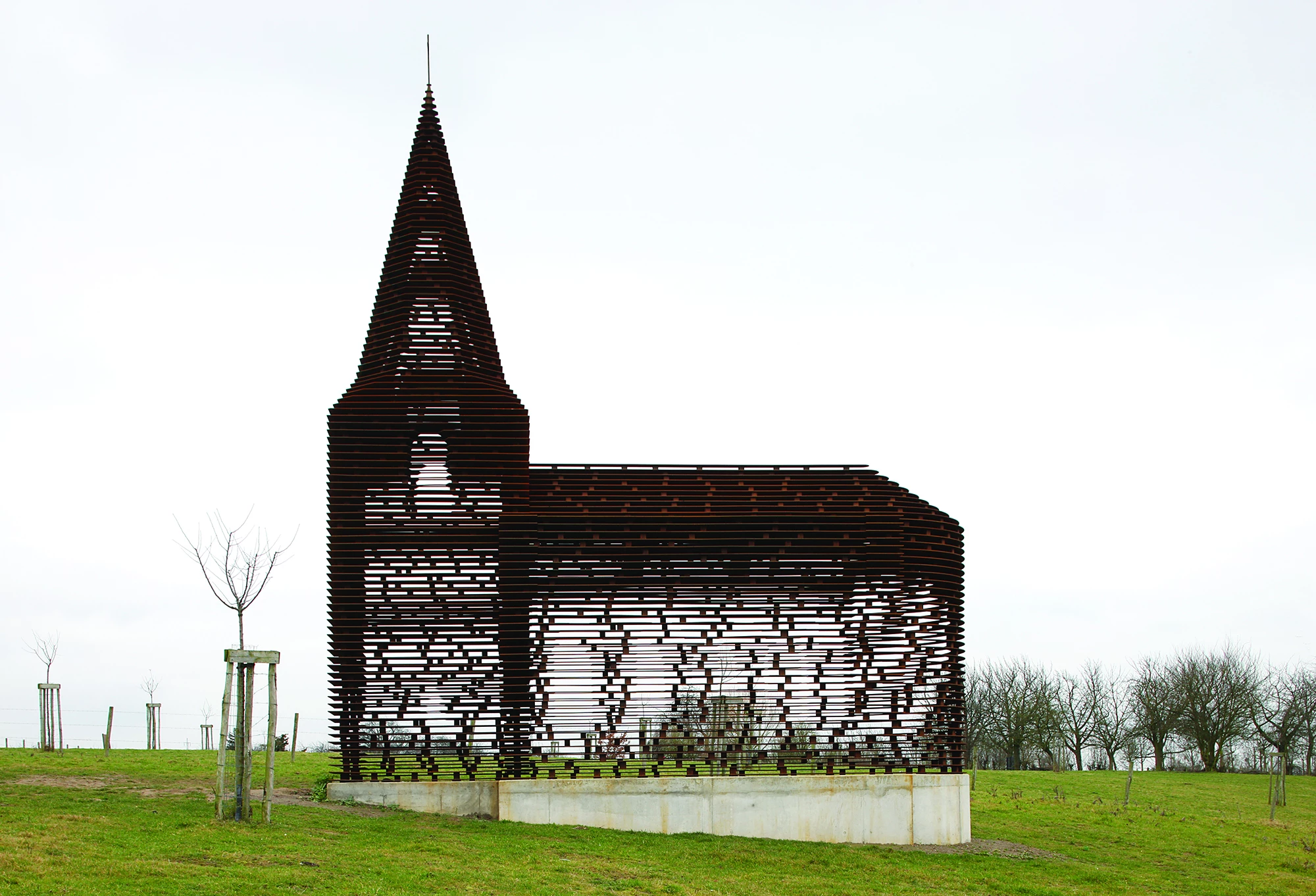
The work preserves recognizable proportions — tower, pitched roof, central volume — while its layered construction produces a visual effect that folds the agricultural landscape of Borgloon into the architecture itself. It is not a place of worship; it is a habitable sculpture that interrogates the relationship between form, light, and territory.
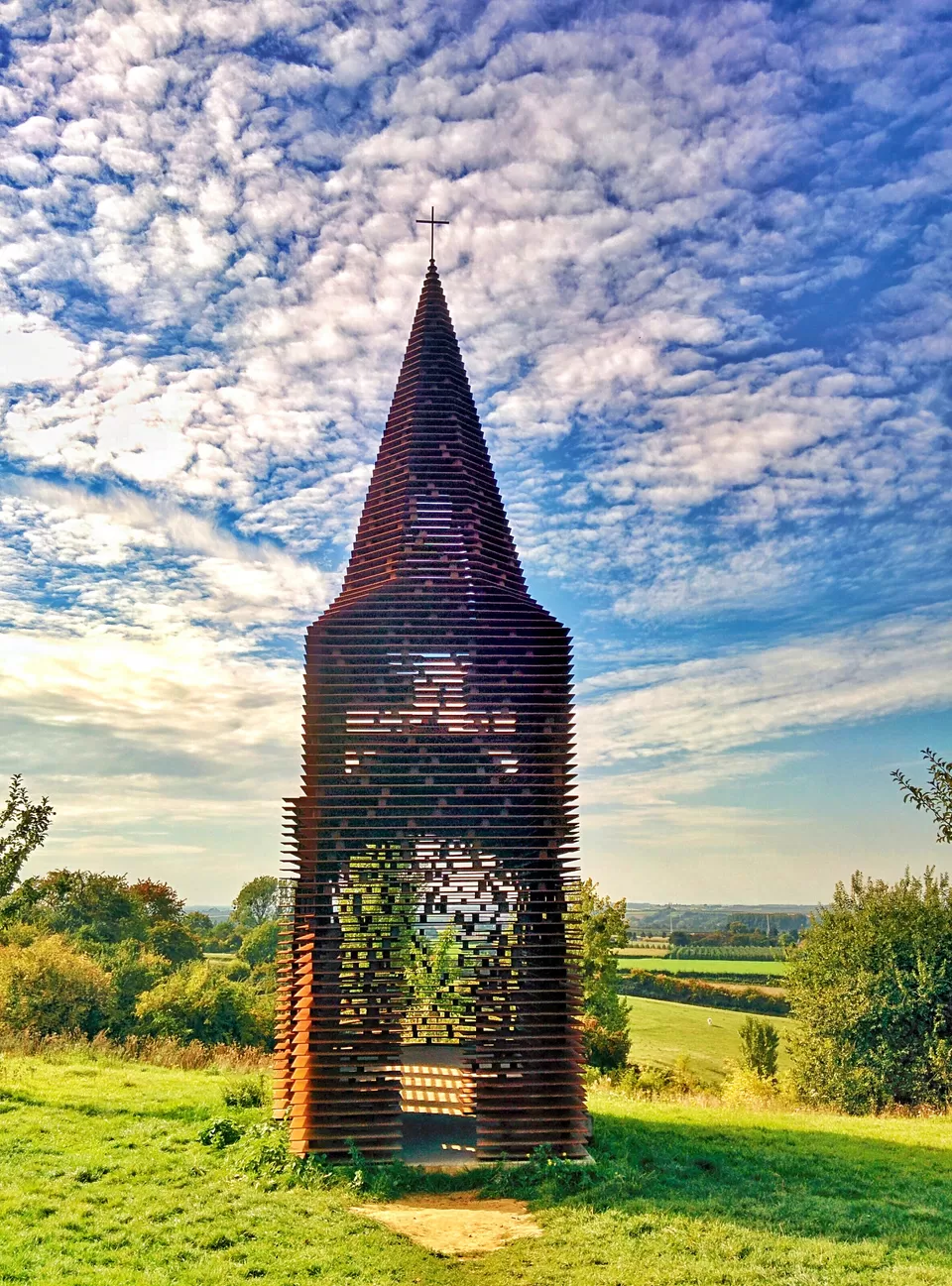
Moving through it, the gaps between the steel plates function as frames, composing views of orchards, rolling hills, and wide open horizons. Light transforms the interior throughout the day, generating an experience that holds material weight and visual lightness in precise tension. Every angle yields a distinct perception, which has made the site one of the most sought-after photographic destinations in Belgium.
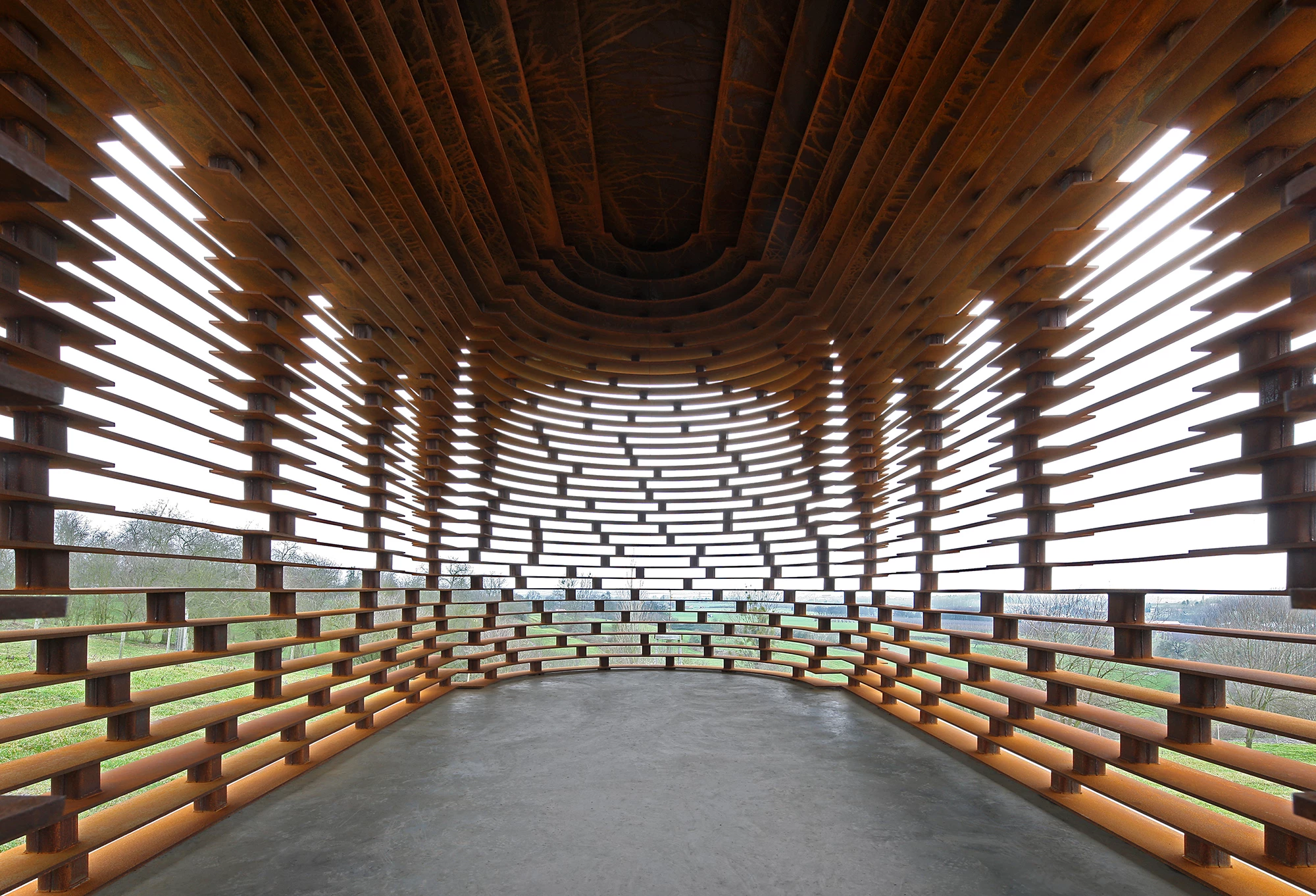
Reading Between the Lines is part of an open-air art circuit that invites discovery through the country’s less-traveled routes. Its seamless integration with the landscape — and its rare ability to fundamentally alter how one sees — make it essential for travelers who seek experimental architecture, compelling photography, and visual experiences with genuine character.


 '
'