Goodbye to Code, Hello to AI with Vibe Coding
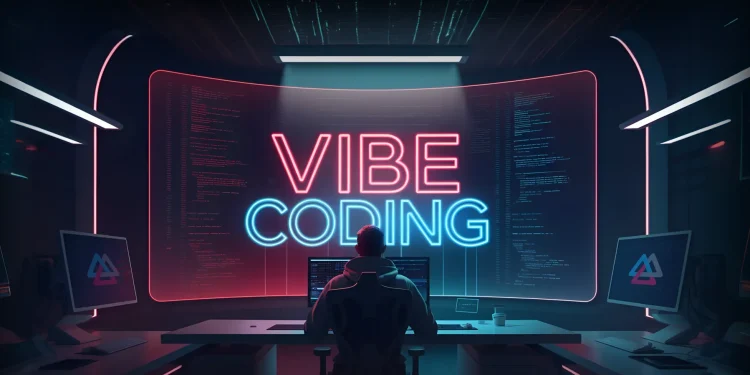
Thanks to vibe coding and artificial intelligence, anyone with an idea can transform their digital vision into reality — no prior programming knowledge required.
Programming has carried an air of mystery for decades, but that is changing fast. Today, the term vibe coding is emerging as a defining trend, driven by tools that allow users to create software in an entirely intuitive way. Imagine designing an application that transcribes your podcasts — or one that calculates whether a piece of furniture will fit in your car — simply by describing what you need. This concept is not only democratizing access to software creation; it is fundamentally reshaping how we think about the skills required to build technology that is genuinely useful in everyday life.
Coding platforms have evolved to the point where anyone can experience the process of building a program without writing a single line of code. Tools such as Cursor, which guides users step by step, and Replit, which offers an AI-powered development environment, have made programming more accessible than ever. Applications like Bolt and Lovable go further still, enabling users to create fully functional apps from plain-language descriptions. The implication is significant: instead of mastering complex syntax and logic, all it takes today is a clear idea and a measure of patience.
The appeal of vibe coding lies in its capacity for personalization. Unlike the standardized solutions offered by large technology companies, this approach enables users to build tools designed precisely around their own needs. Some have created applications to audit the contents of their refrigerator and decide what to cook; others have built tools to calculate available cargo space in their vehicles before a move. These innovations may not change the world outright, but they undeniably streamline daily life — and they challenge the long-held assumption that only engineers can create software.
Artificial intelligence is central to this evolution. Accessible languages such as Python, combined with advanced language models like ChatGPT and Gemini, now make it possible to convert natural-language instructions into working code. This dynamic has transformed programming into a far more intuitive process. Computer scientist Andrej Karpathy, a pioneer of the concept, describes how software creation increasingly resembles a dialogue between humans and machines — one in which a clear idea is all that is needed for AI to handle the technical execution.
The transformation that vibe coding heralds is only beginning. As the technology advances and becomes ever more accessible, the barriers that once stood between an individual and their digital ambitions are dissolving. We are entering a new era of innovation — one in which anyone can become a creator, and ideas can take shape without the need for engineering expertise. The future of digital creation is, quite literally, in our hands.


 '
'