Books That Open the Door to the Future
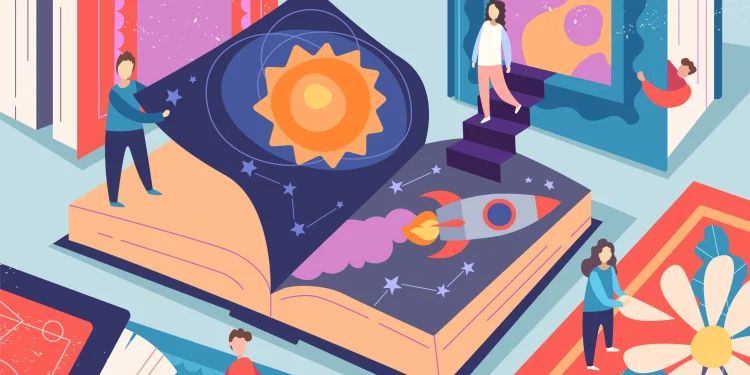
Navigating the Future: Essential Books for Understanding the Age of Transformation
In a world where certainties dissolve and challenges intertwine across the political, the ethical, and the technological, reading becomes an act of resistance, anticipation, and transformation.

Under the title Navigating the Future, the publication presents a curated selection of 12 essential works that illuminate the defining axes of the 21st century: artificial intelligence, climate change, quantum supremacy, geopolitics, and even the ancestral memory of water. These are not casual reads; they are texts that compel thought, demand decision, and invite us to reimagine the present through the tools of critical thinking.

Among the standouts is Kate Crawford‘s Atlas of AI, a precise dissection of the mythology surrounding artificial intelligence — revealing it not as a neutral entity but as a machinery deeply entangled with structures of power and inequity. Meanwhile, Michio Kaku‘s Quantum Supremacy extends well beyond physics, issuing a warning about a silent yet inevitable technological revolution poised to reconfigure entire industries.

And at the intersection of the digital and the ancestral, Virginia Mendoza offers an urgent reminder: water is not merely a resource — it is history. Her work proposes a civilizational reckoning with the most vital element of all, at a moment when the world confronts increasingly severe water crises.
The selection also includes profoundly unsettling perspectives, among them those of Annie Jacobsen, who confronts the moral and political weight of a world in which a nuclear missile can traverse continents in six minutes. How does a civilization make decisions when there is no margin for error?
These books do more than inform — they awaken. They are vehicles for understanding that literature is not detached from the world but is, in fact, the terrain where we rehearse answers we do not yet possess. Every page is a call to action, a provocation to think differently, to conceive alternative futures, and to take a position in a present that demands our full participation.
To read is a conscious act of immersion in the stories, theories, and visions that challenge us to think beyond the obvious — to question the established order and to imagine what might yet be possible. Because, in the end, reading connects us not only to the past but guides us toward the uncertain horizon we are building, day by day. And if the future is a conversation still waiting to be had, these books are the finest place to begin.

 '
'