The Future of Search Is on Trial
Google Search on the Line: Sundar Pichai’s Warnings at the Antitrust Trial
Sundar Pichai, CEO of the company, took the stand with a warning that resonated far beyond the courtroom: the measures proposed by the U.S. government to curtail its search dominance could threaten the very continuity of Google Search and fracture the global digital ecosystem.
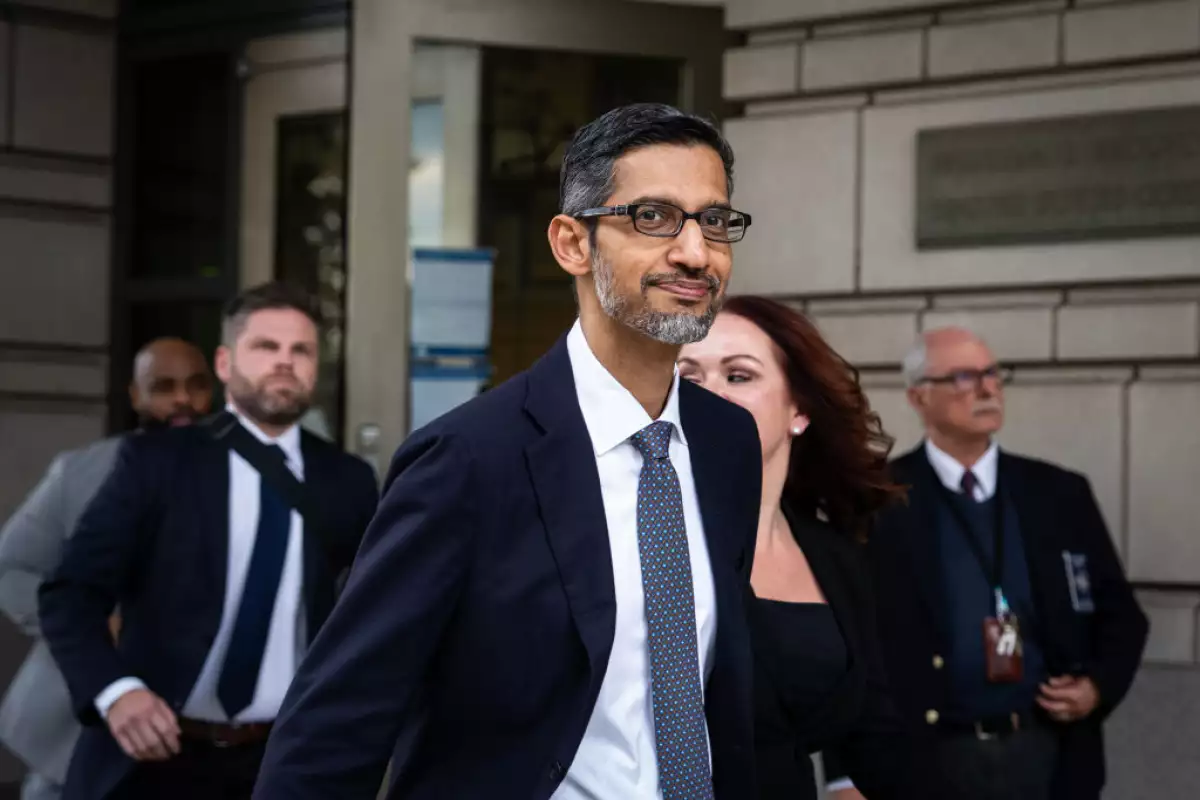
The antitrust trial Google has faced since 2020 has evolved into an ideological battle over the limits of technological power. For the Department of Justice (DOJ), the world’s most-used search engine has leveraged restrictive practices and exclusive agreements — among them its contracts with Apple — to suppress competition and entrench its dominance. For Pichai, however, the government’s proposed remedies represent an existential risk: “They are not only impractical, but potentially destructive to innovation.”
During his testimony, the executive did not sidestep questions about Google’s influence on advertising prices or its operating margins. But he was unequivocal in warning that compelling Google to share critical resources with rivals could open the door to wholesale replication of its technological infrastructure — the product of more than $49 billion in research and development investment. “This is not merely about data,” he said. “It represents years of cultural engineering and innovation that cannot be replicated on a spreadsheet.”

Among the most disruptive remedies proposed by the DOJ is the forced divestiture of Google Chrome, the browser that currently commands the market. Pichai’s response was personal: he himself led its development in his early years at the company, and he assured the court that “no other company has the capacity to sustain its level of performance and security.” In 2024 alone, Google invested more than $1 billion to maintain and evolve Chrome.
But what is at stake extends well beyond Google’s corporate architecture. The verdict could set a precedent for the entire digital sector — from how technology ecosystems are built, to how far regulation can reach before it begins to impede progress. The line between market power and innovative leadership grows thinner by the day, and this trial may prove to be the breaking point.
In the words of Pichai, “breaking up Google may sound like market justice, but the price could be a generation of lost innovation.”
What began as a debate over commercial practices has deepened into a far more consequential question: how do you balance power when the future depends on it?


 '
'