Combat in Space: The Dawn of Orbital Dogfighting?
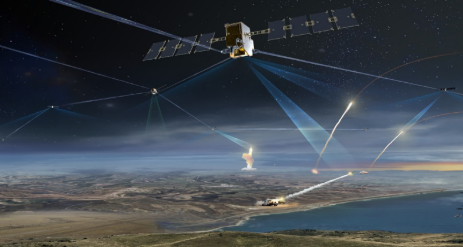
The United States Space Force (USSF) is on high alert. According to General Michael Guetlein, Vice Chief of Space Operations, the space capabilities of China and Russia are closing the gap with those of the United States at an alarming pace. His warning carries particular weight in the wake of a recently detected maneuver by several Chinese satellites in low orbit — executing what he has called “dogfighting in space.” For the uninitiated, dogfighting refers to close-range aerial combat between fighter aircraft; it now appears that this same tactical logic is being transposed to the orbital domain.
General Guetlein described how Chinese satellites executed synchronized maneuvers — “moving in, out, and around one another” — in a demonstration that lays bare the sophistication of their tactics. This is not an isolated incident: the USSF has been monitoring such behavior since 2024, when three Shiyan-24C satellites and two assets from the Shijian-6 system conducted coordinated exercises pointing to deeply concerning advances in electronic intelligence technology.
Beyond these maneuvers, the orbital environment is growing measurably more tense. The revelation of two Chinese satellites capable of deploying advanced laser monitoring and microwave radiation techniques has raised the stakes considerably. One of these satellites carries a camera capable of identifying human faces from low Earth orbit; the other — the first radar satellite positioned in high orbit — provides critical intelligence across the Asia-Pacific region. Satellite interception and capture exercises, such as those observed in January 2022, confirm that the tactics of space warfare are becoming both more sophisticated and more alarming with each passing year.
The American Response: Rethinking Space Strategy
Guetlein’s position is unambiguous: the United States must fundamentally rethink its space strategy in an environment where it no longer holds unchallenged technological dominance. Dependence on commercial assets and deeper collaboration with allies are no longer optional — they are essential. “We will only be as good as the resources we are willing to commit to space superiority,” he stressed, underscoring the urgent need to increase the USSF’s budget and restructure the defenses protecting American satellites.
As the orbital environment hardens into a new theater of conflict, it is clear that the competition has moved well beyond the atmosphere. The United States must act with urgency — because the race for space dominance is no longer the foregone conclusion it once appeared to be. Strategic alliances and sustained investment in technology may prove the decisive factors in preserving American superiority and securing the satellite architecture on which it depends.


 '
'