Earth as an Energy Source
Earth as an Energy Source
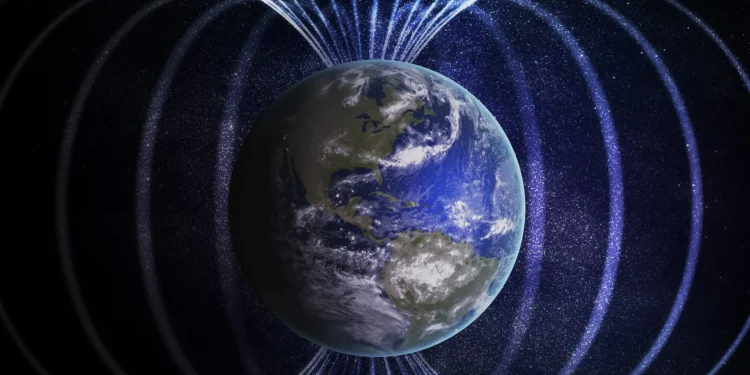
A team of scientists has generated 17 microvolts of electricity from Earth’s rotation — quietly challenging what we thought we knew about energy resources. The search for alternative energy sources is a subject that inspires equal measures of hope and controversy. Among the boldest ideas is the possibility of harnessing Earth’s rotation as an inexhaustible source of electricity. As compelling as the concept may be, the reality is considerably more complex. For nearly 200 years, scientists have attempted to capture this energy with virtually no meaningful results — until now. A team of researchers has succeeded in generating a minute quantity of electricity, a finding that could challenge the prevailing consensus of the scientific community.
Researchers Christopher Chyba, Kevin Hand, and Thomas Chyba of Princeton University have been pursuing this idea since 2016. In their effort to unravel the complexities of electromagnetic induction, they identified a logical gap in the assumption that energy cannot be extracted from Earth’s rotation. Their solution was a 30-centimeter cylinder of manganese-zinc ferrite — a material that functions simultaneously as a weak conductor and a magnetic shield. This allowed them to isolate the experiment from ambient electromagnetic interference and capture 17 microvolts of electricity: a vanishingly small quantity, yet a surprisingly significant one.
.jpg)
A New Perspective on the Challenges of Sustainable Energy
What does capturing 17 microvolts actually mean? The amount is less than a single neuron produces when it fires — yet the experiment represents a notable advance in the field. The team replicated the results at two separate locations, confirming that the readings were consistent with their original theory and could not be attributed to simple local interference. This kind of independent validation is essential in science, where every confirmed result can open new avenues of inquiry.
Despite the excitement surrounding the discovery, the study’s authors are measured in their assessment: this is only a starting point. The energy generated is considered a proof of concept, and independent groups must reproduce the experiment before the results can be fully validated. If science has demonstrated anything across the centuries, it is that the path toward sustainable development is treacherous and unforgiving. Yet the fact that a stationary object in a laboratory can effectively “move” in response to Earth’s rotation is, without question, a concept that challenges our most fundamental assumptions about energy.
It is also worth noting that extracting electricity from Earth’s rotation would not, by any measure, be “free.” The principles of energy conservation dictate that every incremental contribution of electricity represents a marginal drag on the planet’s movement. The implications of scaling such technology could, in theory, alter Earth’s rotation period — a prospect as intellectually fascinating as it is sobering. The future of energy may be full of surprises, and perhaps this relentless search will ultimately lead us to solutions that are as genuinely innovative as they are sustainable.


 '
'