AI Is Here to Stay: Threat or Opportunity?
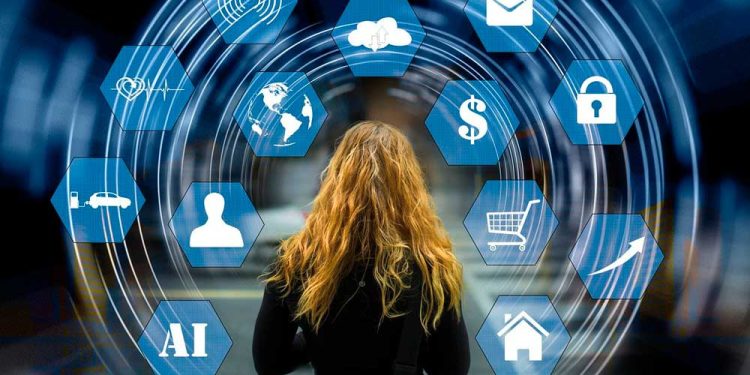
Are we truly ready for what comes next? The age of artificial intelligence has already arrived.
Artificial intelligence (AI) is redefining how we interact with technology — and challenging everything we thought we knew about work and creativity.
As we navigate the technological revolution of the 21st century, the central role that artificial intelligence plays in daily life has become impossible to ignore. From virtual assistants such as Alexa and Siri to content generation tools like ChatGPT, AI is now present at virtually every turn of our personal and professional existence. The question is no longer whether we will accept it — experts are confident the answer is yes — but rather how honestly we reckon with its limits and its potential.
Transformation and Its Challenges
The notion of machines capable of learning and reasoning independently once belonged firmly to science fiction. Today, we are witnessing an exponential surge in AI adoption that is reshaping entire industries. A recent report estimates the global AI market will reach the staggering figure of $1.765 trillion by 2030. The applications are vast: in healthcare, AI is enabling more precise diagnostics; in financial services, it is powering sophisticated fraud-prevention algorithms that no human team could replicate at scale.
Yet the picture is not without shadow. The implementation of AI brings with it a series of pressing ethical challenges and legitimate concerns about employment. As automation advances across sectors — from manufacturing to customer service — a consequential question emerges: will human workers be rendered obsolete in their own fields? The answer lies not in fear, but in the urgent imperative of reskilling — a fundamental adaptation that tomorrow’s workforce, in every discipline, will be called upon to make.
Creativity, too, is being redrawn by AI. Artistic creation, music, and writing now routinely involve algorithms capable of mimicking human style with unnerving fidelity. But can a machine be genuinely creative? Even as AI-generated works multiply, the essential human impulse behind creation remains the exclusive province of the artist. This tension compels us to reconsider what creativity truly means — and what originality is worth in a world where machines can reproduce what already exists.
The Future of Artificial Intelligence Is in Our Hands
The arrival of artificial intelligence is, without question, altering the world as we have known it. What matters now is how deliberately we harness its potential without losing sight of the irreplaceable value of human judgment. Every step forward in this new era demands both caution and responsibility. Ultimately, the future will not be determined by machines — it will be shaped by the choices we make in deploying technology to our advantage. The intersection of human and machine intelligence may well be the most consequential frontier of our time — provided we approach it with open minds and a clear sense of purpose.

 '
'