The New Chapter of the Scientific Popes
The election of Robert Francis Prevost as Pope Leo XIV resonated around the world — in part because he is the first leader of the Catholic Church to hold a degree in Mathematical Sciences. He chose his papal name in honor of his predecessor, Leo XIII, who guided the institution through the great industrial revolution of the late nineteenth century.
The new Pope is no stranger to the overwhelming influence of technology on society. In one of his first statements as pontiff, he identified artificial intelligence as one of the great challenges facing humanity. That has led more than a few observers to ask whether Leo XIV is the first pope to adopt a genuinely serious posture toward science and technology.
History, however, offers a more nuanced answer. The Catholic Church has produced leaders with scientific inclinations before — figures who made meaningful contributions to social, technological, and scientific progress. During the medieval and Renaissance periods, ecclesiastical figures routinely received a multidisciplinary education encompassing theology, philosophy, logic, mathematics, astronomy, and the arts. With a handful of celebrated exceptions, the historical relationship between the Church and scientific knowledge has been remarkably harmonious.
With that context established, here are some of the most notable popes with scientific formation — the so-called “Scientific Popes” — who advanced the knowledge of their age.

Pope Sylvester II (Gerbert d’Aurillac) was the first French pope in history, known as “the Pope of the Year 1000.” He was a scholar of arithmetic, geometry, astronomy, and music. His affinity for what were then called the liberal arts led him to introduce the Islamic decimal system and the use of zero into France. He also invented the Abacus of Gerbert — a device of twenty-seven metal compartments into which counters bearing Arabic numerals were placed, enabling multiplication and division. Some regard it as a forerunner of the modern calculator.
The life of Pope Sylvester II is shrouded in myth and accusations of heresy, most of them a consequence of his preference for the exact sciences and the devices he designed. Certain accounts link him to the construction of a speaking bust or head kept in his chambers, which he allegedly consulted when in doubt. The nature of that supposed invention varies between a mechanical automaton and a cursed object.

Pope John XXI (Pedro Julião) was the 187th pope of the Catholic Church, reigning from 1276 until his sudden death in 1277 — less than a year in office. He studied at the University of Paris, concentrating on medicine, theology, physics, metaphysics, and logic. As a scholar, Pedro Julião published the medical text Thesaurus pauperum and served as a master at the Lisbon School.
Some historians have connected Pope John XXI with the author Petrus Hispanus, who wrote the logic manual Summulae logicales magistri Petri Hispani — a foundational text used in European universities of the period. It is believed the scholar published his academic works under a pseudonym as he ascended the ecclesiastical hierarchy. His death came in a tragic accident: the roof of his private study, constructed so that he might conduct research without distraction, collapsed upon him.

Pope Gregory XIII (Ugo Boncompagni) reigned from 1572 to 1585. He was not a scientist but a jurist, having studied law at the University of Bologna and earned a doctorate in both canon and civil law. Yet he occupies a singular place in the history of science as the authority who gave the world the calendar we still follow today — twelve months, 365 days — hence the Gregorian calendar. The adoption of this new system resolved the cumulative drift produced by the Julian calendar, which ran eleven minutes and fourteen seconds longer than the solar year. Gregory XIII did not invent the calendar himself; he had the wisdom to accept the counsel of astronomer and mathematician Christopher Clavius, who performed the calculations. The decision was driven, in part, by a papal temperament genuinely open to intellectual change.
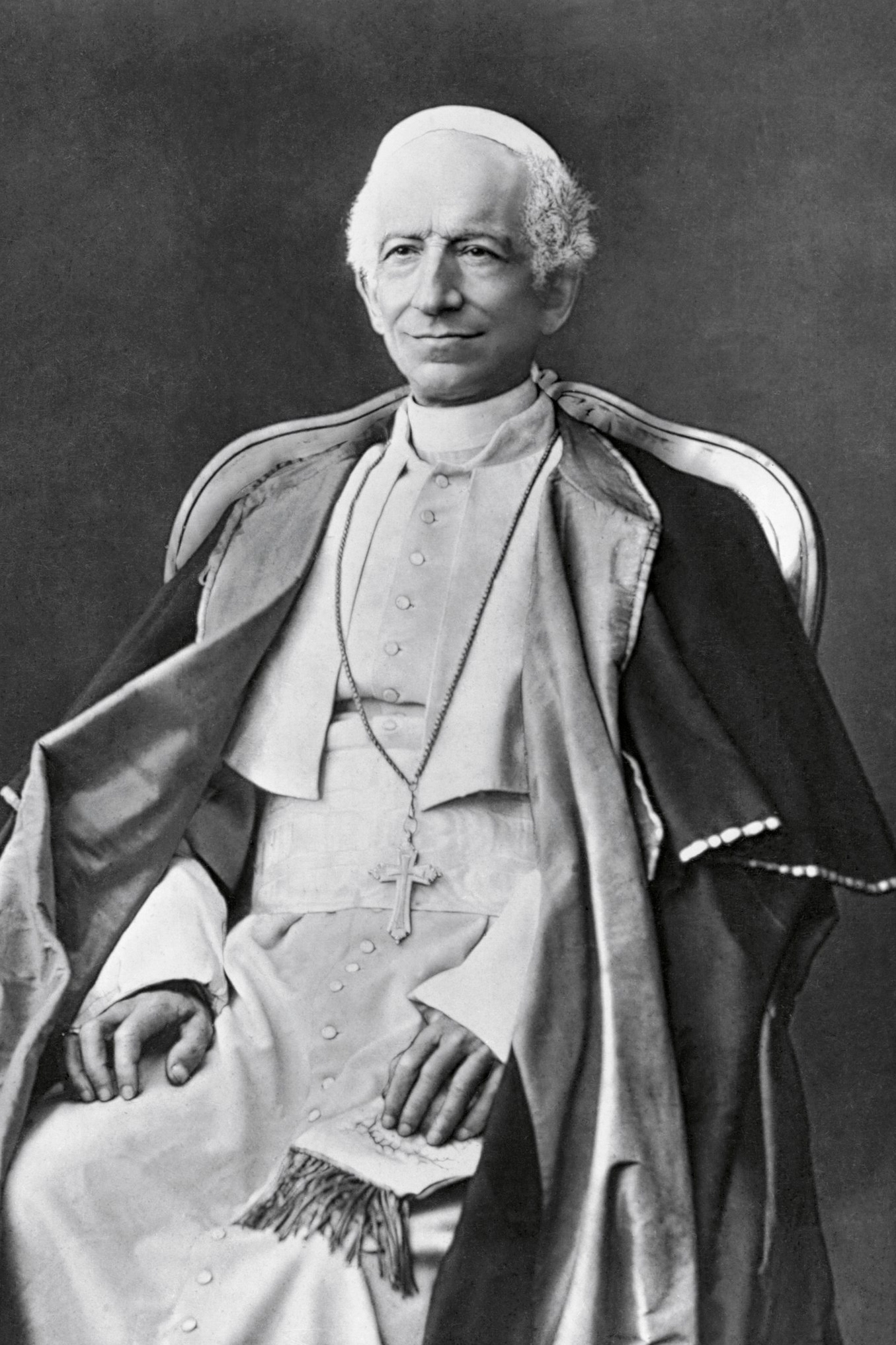
Pope Leo XIII (Gioacchino Pecci) was the predecessor who inspired the newly elected leader of the Church to take his name. He not only navigated the upheaval of the industrial revolution but founded schools of philosophy, championed academic initiatives, and oversaw the reopening of the Vatican Observatory — which has functioned as a school for astronomers ever since. Leo XIII was not a scientist in the strict sense, but he received a rigorous multidisciplinary education at the Pontifical Gregorian University.
“Scientific Popes” notwithstanding, the Catholic Church has, in general, maintained a productive relationship with science. Even in the most celebrated cases of tension — such as the acceptance of the heliocentric model, in which the Earth orbits the Sun — history presents a more nuanced picture than popular myth allows. Pope Clement VII showed genuine interest in the treatises of Nicolaus Copernicus as early as 1532. The supposed condemnation of Galileo Galilei a century later did not end in execution, as legend has it, but in house arrest. And in 1992, Pope John Paul II officially acknowledged the errors of the Church in the proceedings against Galileo.


 '
'