A Frozen Discovery
The James Webb Space Telescope has detected crystalline water ice orbiting the star HD 181327 — located 155 light-years from Earth — marking a milestone in humanity’s exploration of the cosmos. The find is significant not only because it confirms the existence of frozen water beyond our own solar system, but because it offers an entirely new perspective on planetary formation and the potential habitability of distant worlds.
Scientists have long theorized about the presence of ice in stellar systems beyond our own, yet gathering concrete evidence has proven a formidable challenge. The James Webb’s advanced capabilities have now made it possible to detect crystalline water ice — a fundamental building block of planetary formation — in quantities that carry profound implications for the existence of environments conducive to life.
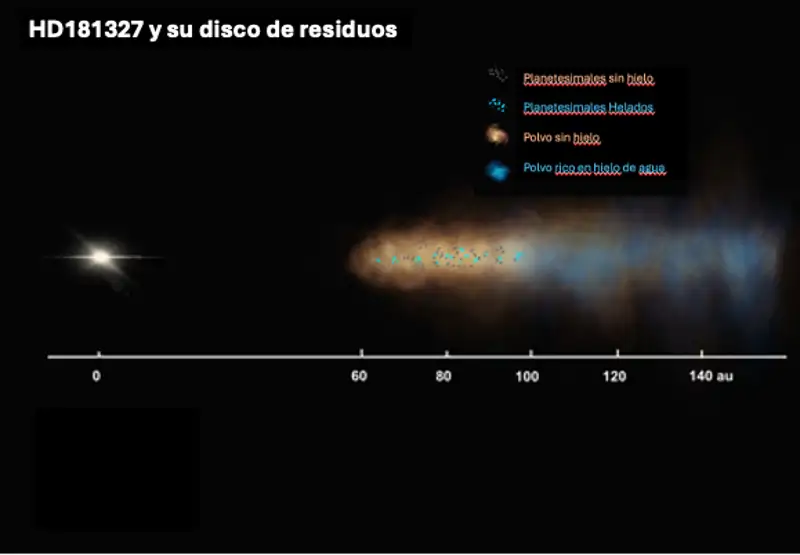
With unparalleled precision, the telescope has demonstrated that while water in its gaseous state is abundant throughout the universe, water ice plays an indispensable role in these remote regions. Its presence suggests that the same mechanisms that gave rise to our own icy bodies — comets among them — may operate across other stellar systems as well.
This discovery invites serious reflection on the role of water in the cosmos and what it may mean for the future of space exploration. By opening new avenues for astrobiological research, we may be closer than ever to answering the question that has defined the scientific imagination for generations: is there life beyond Earth?



 '
'