Made in China
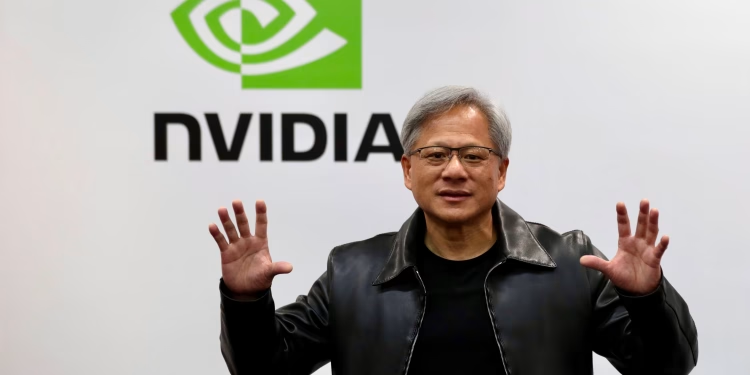
The deepening geopolitical tensions between the United States and China are reshaping the global technology landscape — nowhere more consequentially than in artificial intelligence. Nvidia CEO Jensen Huang has voiced serious concerns about the export restrictions imposed by the U.S. government on AI chips destined for China. His remarks lay bare a complex reality: China is not merely determined to advance in AI — it may well be capable of doing so entirely on its own terms.
Huang argues that these restrictions, far from slowing China’s progress, could compel the country to develop its own solutions, accelerating domestic innovation and potentially consolidating China’s position in the global AI market. The Nvidia CEO points to a striking data point: half of the world’s AI researchers are based in China — a figure that signals a robust ecosystem and a formidable capacity for technological development.
The U.S. strategy of denying China access to the most advanced chips may, paradoxically, be accelerating the very technological progress it seeks to contain. Meanwhile, Nvidia faces mounting consequences of its own, absorbing significant financial losses as access to the Chinese market remains closed. The situation raises defining questions about the future of artificial intelligence and the geopolitics of technology. Can the United States sustain its competitive edge — or will China, armed with its vast reservoir of talent and capital, ultimately rewrite the terms of leadership in this arena?

 '
'