Hangars: The Asset Scaling With Executive Aviation in Mexico
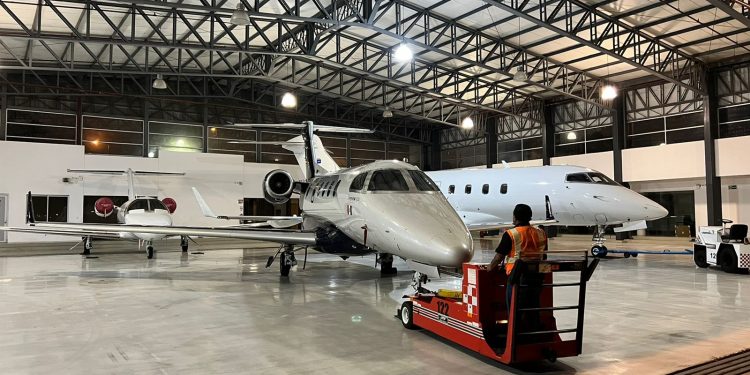
In Mexico, demand for covered space and specialized services is concentrated in nodes where industry, high-net-worth tourism, and corporate connectivity converge. That growth is evident in the expansion of hangars, aprons, and services at the country’s key airports.
At the concession and airport operations layer, Grupo Aeroportuario del Pacífico (GAP), Grupo Aeroportuario del Centro Norte (OMA), and Grupo Aeroportuario del Sureste (ASUR) manage terminals where corporate and private traffic operates alongside commercial aviation. At destinations such as Los Cabos, Cancún, Guadalajara, and Monterrey, complementary infrastructure for executive aviation has become a source of recurring revenue and services within the broader airport ecosystem.
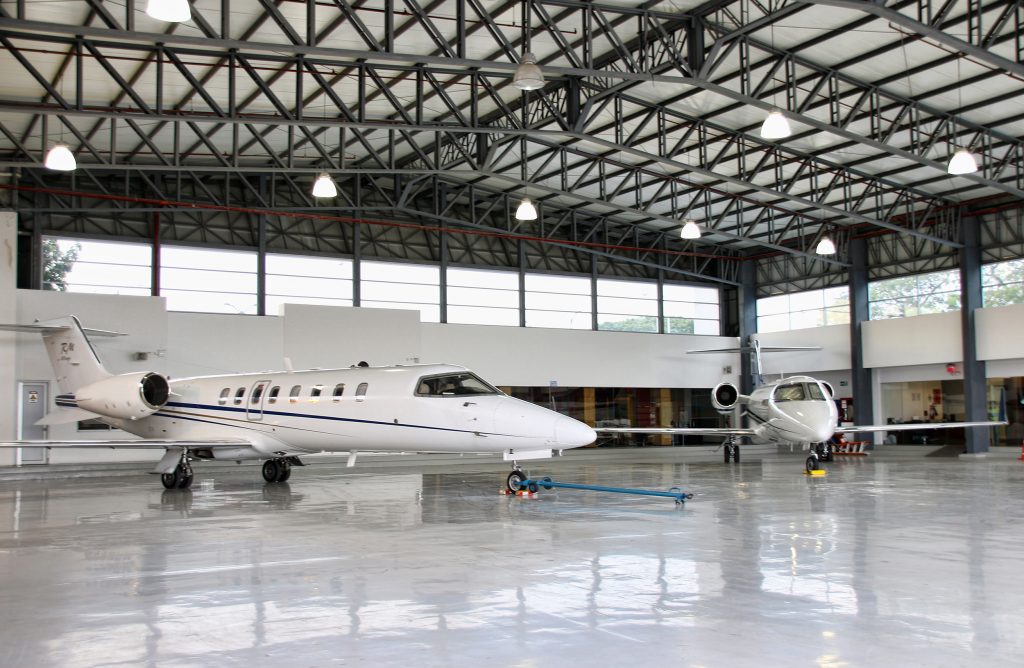
On the ground, a premium hangar functions as a specialized real estate asset: it demands permits, security protocols, technical compliance, and ongoing coordination with the airport operator. Supply within airport zones is limited and tightly regulated, which means expansion is expressed through construction projects, facility enlargements, and lease agreements.
The model is sustained by multi-year contracts — frequently denominated in dollars — and by the recurring revenue associated with aircraft parking, handling, fuel, and technical services. In a well-positioned complex, fixed lease income alone can amount to millions of dollars annually, before accounting for ancillary streams.
The maintenance dimension adds further stability to the system. In Querétaro, the presence of Bombardier‘s service center reinforces the cluster logic: an active fleet generates occupied infrastructure and scheduled services in a self-reinforcing cycle.

For the investor, the objective is not to acquire an airport — concessions are federally held — but to participate in the segment of the chain with the clearest revenue visibility: hangar development, lease agreements, executive aprons, and support services. Scale is measured in built space and signed contracts.
The strategic question is straightforward: who captures the recurring value when the jet lands?



 '
'